
Introduction Of Why the Agba Ethnic Nationality Matters Now
More than a century ago, the geographical and political realities of the territory that makes up modern Nigeria were considerably different from what they are today. Administrative boundaries have changed, political structures have evolved, communities have experienced new migrations and interactions, and identities that were once organised around smaller geographical or cultural groupings have developed into broader ethnic and political identities.
Yet Nigeria is still evolving. As the country moves further into its second century as a modern nation-state, communities that understand their collective interests and organise around them are better positioned to influence national conversations, attract development and protect their political and economic future.
This is the context in which the idea of an Agba ethnic nationality deserves serious consideration.
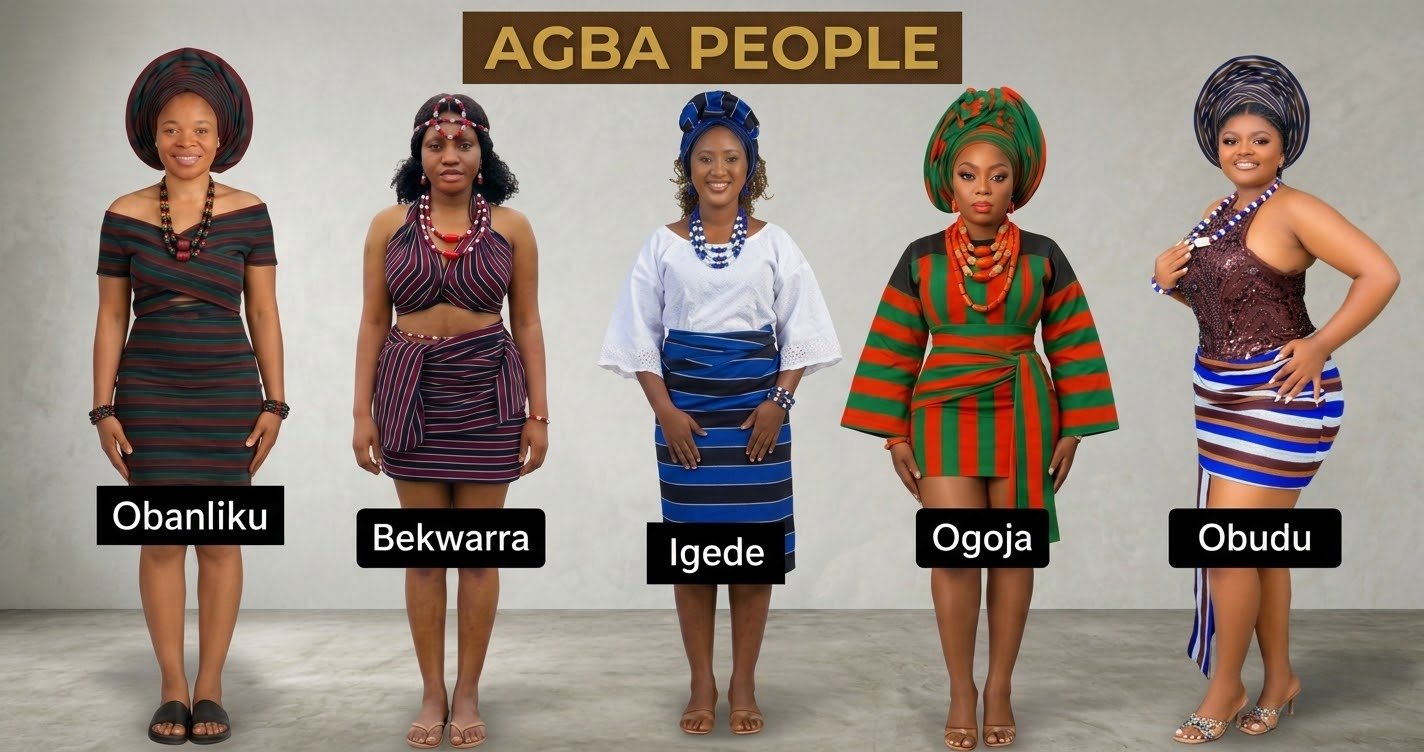
The people associated with Agba ancestry and identity are predominantly found across Northern Cross River State and the Igede areas of Benue and Cross River States. They include the Bendi, Bette, Alege, Bekwarra, Mbube and Igede communities.
Although these communities are presently recognised through different tribes and linguistic identities, the Agba proposition suggest that they possess sufficient historical, ancestral, geographical, cultural and political connections to build a broader collective ethnic identity.
The objective is not to erase existing communities or force people to abandon their tribal cultural practice. Rather, it is to establish a larger identity through which these tribes can coordinate their political interests, pursue economic development and present a stronger collective voice at the national level.
The question is therefore not simply whether the communities have historically been described by different names. It is whether they can build a common ethnic identity that serves their shared interests in the Nigeria of today and tomorrow.
Understanding the Tribes That Make Up the Emerging Agba Ethnic Nationality
The emerging Agba ethnic nationality encompasses communities and tribes located across Northern Cross River State and the Igede region.
These include:
1. The Bendi People
The Bendi people are found principally in Obanliku Local Government Area of Cross River State. They form part of the northern Cross River communities associated with the broader Agba identity.
2. The Bette People
The Bette people are found in Obudu Local Government Area of Cross River State. Their place within the Agba ethnic nationality is based on the broader historical and cultural relationships they shares with the other Agba subgroups.
3. The Alege People
The Alege people are also found in Obudu Local Government Area. Together with the Bette, they form part of the communities that the Agba ethnic nationality seeks to bring into a wider collective identity.
4. The Bekwarra People
The Bekwarra people are primarily found in Bekwarra Local Government Area of Cross River State. They are an important component of the Agba nationality and occupy a strategic geographical position within Northern Cross River.
5. The Mbube People
The Mbube people are found in Ogoja Local Government Area of Cross River State. Their inclusion reflects the broader historical, linguistic and geographical relationships that underpin the Agba ethnic identity.
6. The Igede People
The Igede people are said to be the largest populated group among the Agba nationality.
They are predominantly found in Oju and Obi Local Government Areas of Benue State, with other Igede communities and settlements extending into Gwer East, Konshisha Local Governments areas of Benue state and Yala Local Government Area of Cross River State.
Their geographical distribution makes them an important part of any serious conversation about the political and economic future of the Agba ethnic nationality.
It is important, however, to clarify that local government boundaries do not perfectly correspond with ethnic boundaries. Not every community in Obanliku is Bendi, just as not every community in Obudu is Bette or Alege. Similarly, not every part of Ogoja Local Government Area is Mbube, and not every community in Yala is Igede.
The emerging Agba ethnic identity must therefore be understood through the actual communities and their historical relationships, rather than through the assumption that every resident of a particular local government area belongs to one ethnic group.
Agba Identity Must Respect Existing Ancestral Identities
One of the most important principles behind the emerging Agba ethnic nationality is that the development of a broader ethnic identity is not an instrument for suppressing smaller identities.
The Bendi, Bette, Alege, Bekwarra, Mbube and Igede communities have their own histories, languages, traditions and internal practices. These identities deserve recognition and protection.
The emergence of Agba as a wider identity is therefore based on voluntary association, mutual recognition and the gradual development of shared interests and culture.
A Bette person is not required to abandon his/her Bette identity to participate in an Agba political project. The same applies to a Bekwarra, Bendi, Mbube, Alege and Igede person.
The idea is that people can retain their immediate ancestral and community identities while identifying with a larger nationality [AGBA].
This arrangement is not unusual in the development of broader ethnic identities, example of such arrangement is the fact that an Egba man, Ijebu man, Ijesha man, Awori man still maintained his/her identities while all of them remains a YORUBA PEOPLE similarly, the Ngwa man, Ezza, Nnsuka man, Ndoki man still maintained his/her identities while all of them remains a IGBO PEOPLE, People can maintain identities connected to their towns, clans and smaller communities while also belonging to a larger ethnic grouping.
For Agba, the objective is to create that additional layer of identity.
It must also be recognised that ethnicity is not determined by ancestry or DNA alone. Shared historical experiences, language, culture, geographical relationships, political organisation and collective interests can all contribute to the development of broader ethnic identities.
Economic cooperation and political survival can also encourage tribes and communities to recognise common interests that were previously pursued separately.
This does not mean that economic convenience automatically creates ethnic kinship. Rather, it means that a shared political identity can develop through deliberate cooperation, mutual acceptance and the gradual strengthening of common institutions.
This is the principle upon which Agba ethnic nationality is built on.
Language: A Difference That Should Not Become an Obstacle
Language is one of the most obvious differences among the communities associated with the emerging Agba nationality.
However, the Agba ethnic development innitiative (AEDI) suggest that these differences should not automatically prevent the development of a common Agba identity.
According to the linguistic observations presented to this researchers, the languages and speech varieties found across Obanliku and Obudu are highly mutually intelligible, with the degree of intelligibility estimated at approximately 90 per cent in some comparisons.
The Mbube and Bekwarra languages are also described as having substantial mutual intelligibility with some of the languages of Obudu and Obanliku, estimated to be at approximately 70 per cent.
Igede, on the other hand, is described as having considerably less mutual intelligibility with these languages: approximately 30 per cent in some comparisons with Ogoja and Bekwarra varieties, and about 10 per cent with the languages of Obudu and Obanliku.
Nevertheless, the larger argument is that linguistic differences do not necessarily make collective ethnic nationality impossible.
A modern Agba identity does not have to depend on every community speaking exactly the same language. It can develop through cultural exchange, educational cooperation, translation, common civic institutions and the promotion of multilingual communication.
Over time, a shared cultural and political identity could become stronger without requiring the disappearance of existing languages.
Political and traditional Organisation: The Foundation Already Exists
Beyond language, the Agba ethnic nationality identifies an important feature shared by the communities: established systems of traditional and political organisation.
The communities are not without internal structures of leadership.
In Obanliku, the various communities and language groups operate within a traditional leadership structure headed by the Paramount Ruler of Obanliku.
Similarly, such traditional leadership arrangements exist in Obudu, Bekwarra, Ogoja, Yala and among the Igede people.
These institutions have historically provided platforms for community representation, traditional administration, dispute resolution and the coordination of local affairs.
Their existence is significant because the Agba nationality would not necessarily have to begin by creating an entirely new system of internal community organisation.
Instead, the different communities could retain their established local institutions while developing a broader platform for cooperation.
The principle is straightforward:
Each community retains its internal leadership and local political arrangements, while all participating communities coordinate their common interests through a wider Agba platform.
This would allow local political differences to remain local matters while the communities work together on issues that affect their collective future.
It would also reduce the pressure to create a single political structure that attempts to control every community.
The Agba nationality is be a framework for cooperation, not an instrument for centralising authority over the participating communities and tribes.
The Nigerian Lesson: Collective Identity Creates Political Bargaining Power
One of the strongest suggestion for the devepment of Agba ethnic identity comes from observing how ethnic identities function in Nigeria’s political system.
Nigeria’s political history demonstrates that communities with a broader and more widely recognised identity can develop stronger platforms for political mobilisation and national representation.
The Yoruba identity, for example, provides a broad political and cultural framework for communities that also maintain distinct identities, like the Egba and Ijebu.
Similarly, the Igbo identity brings together communities with their own histories and local identities, like the Ezza and Ngwa.
These examples demonstrate how smaller communities can retain their internal identities while participating in a larger ethnic and political grouping.
The larger identity provides a common platform for articulating interests, building alliances and negotiating with the Nigerian state.
The Agba ethnic nationality seeks to establish a similar framework.
Instead of the Bendi, Bette, Alege, Bekwarra, Mbube and Igede communities pursuing every major national issue independently, they could develop a common political position on matters affecting the wider region.
They could still contest elections separately, disagree over local political questions and maintain their individual cultural institutions.
But on issues such as state creation, federal representation, infrastructure, education, regional economic investment and national development policy, they could speak with a more coordinated voice.
That is the meaning of Agba nationality.
The Development Gap in Northern Cross River and Igedeland
The case for a broader Agba identity is not only about history or political recognition. It is also about the development challenges facing the region.
Northern Cross River and Igedeland occupy a strategic geographical area, but their communities have not fully converted their collective human and economic potential into the level of development that their population and resources could support.
The Agba ethnic developement innitiative (AEDI) identifies a number of challenges, including limited access to higher education, inadequate urban infrastructure, uneven economic opportunities and the dependence of many communities on facilities located outside their immediate region.
For residents of Northern Cross River, access to some higher educational, commercial and specialised services has historically involved travelling to other parts of the state.
Calabar and Ikom are examples of urban destinations that residents may look towards for certain services and opportunities that are not sufficiently available in their immediate communities.
Meanwhile, Obudu and Ogoja have the potential to serve as stronger urban centres for Northern Cross River.
The idea is that these towns should not remain underdeveloped while residents continually look elsewhere for the opportunities that a stronger regional economy could provide.
The same concern applies to the Igede areas of Benue State, where the political and economic position of a less populous group can be affected by the wider political structure in which it is found.
The Agba project therefore seeks to address two related problems: the development challenges facing Northern Cross River and the political vulnerability experienced by communities and tribes whose interests are not sufficiently represented at higher levels of government.
A broader identity could provide a platform for confronting these issues collectively.
The Agba project is been accompanied by practical development planning, credible leadership, investment, institutional accountability and a clear economic agenda.
Why the Igede Experience Makes the Agba Question More Urgent
Although the Agba ethnic nationality concerns all the communities and tribes identified within its framework, the political circumstances of the Igede people make the question particularly urgent.
The Igede are predominantly located in Benue State, with communities also found in Cross River State.
Their position within Benue presents a different political reality from the experienced by the communities and tribes of Northern Cross River.
The Agba ethnic developement innitiative (AEDI) suggest that the smaller population and political position of the Igede within Benue make it more difficult for them to exercise influence in state and federal-level decisions.
This concern is particularly important when considered alongside the political opportunities available to communities in Cross River State.
The emergence of Professor Ben Ayade, a Bette man, as Governor of Cross River State is an example of the political opportunities that can be available to a community within a broader state structure.
It demonstrates that a person from a northern Cross River community can rise to the highest political office in the state.
Such an outcome does not mean that every community in Cross River enjoys equal political influence or development. Nor does it mean that political opportunities are guaranteed to every person from Northern Cross River.
But it illustrates the importance of the political environment in which a community operates.
For the Igede, the concern is that their position within Benue’s political structure presents a different set of challenges.
The Agba identity could therefore provide the Igede with a wider political platform, connecting them with communities across Northern Cross River that share geographical, ancestry and historical relationships.
This would not eliminate the need for Igede political organisation within Benue. Rather, it would create an additional avenue for cooperation and advocacy beyond existing state boundaries.
The proposed identity is thus both a regional development idea and a potential instrument of political solidarity.
Three Major Cities/Towns: Oju, Ogoja and Obudu
One of the most ambitious aspects of the Agba ethnic developement is its vision of three major urban centres serving the wider nationality.
These are:
Oju: A Major Urban and Economic Centre In Igedeland
Oju occupies an important position in the proposed Agba geographical and economic framework because of its relationship with the Igede population.
With deliberate planning, investment in infrastructure, education, healthcare, commerce and industrial activity, Oju could develop into a major urban centre serving the Igede areas and the wider Agba region.
Its development would also strengthen the economic relationship between the Igede communities and Northern Cross River.
Ogoja: A Major Administrative and Commercial Centre
Ogoja has historical significance as an administrative centre in Northern Cross River.
Its position makes it an important candidate for further investment in commercial infrastructure, education, healthcare, transportation and public services.
A more developed Ogoja could serve as a major centre for surrounding communities, helping reduce the need for residents to depend on distant urban destinations like Calabar.
Obudu: A Major Education, Tourism and Commercial Centre
Obudu is another important urban centre within the proposed Agba framework.
Its existing geographical and tourism significance gives it opportunities for further development.
With investment in education, hospitality, commerce, transport and other economic sectors, Obudu could become an important urban pillar within the wider Agba region.
The vision is not to make these three towns compete against one another.
Rather, they should develop complementary economic functions, with each serving its surrounding communities and contributing to the prosperity of the wider region.
A connected network of strong urban centres would provide a foundation for regional growth.
Agba Identity and the Creation of Ogoja State
The creation of Ogoja State is another major political objective associated with the Agba ethnic identity.
For decades, the demand for an additional state in this part of Nigeria has been connected to questions of political representation, administrative convenience and regional development.
The proposed Agba nationality could provide a stronger platform for coordinating support for Ogoja State creation.
A united identity would allow participating communities to approach the state-creation question as a shared regional interest rather than as an issue pursued by separate communities with potentially different political priorities.
It could also help develop a clearer vision of what the proposed state should achieve.
State creation is not treated as an end in itself. A new state would only be meaningful if it could provide better administration, improve access to public services, stimulate investment and create opportunities for its people.
For that reason, the Agba project has begin developing a practical vision for the proposed state.
Questions of capital location, administrative structure, local government representation, revenue generation, infrastructure, educational institutions and equitable distribution of opportunities would all require serious consideration.
The proposed Agba identity could provide the political foundation for such a conversation, while the state-creation proposal would remain a constitutional and political process requiring the necessary legal procedures and broad support.
Agba Does Not Mean the End of Local Identities
A major question many people keep asking about the emerging Agba ethnic nationality is the fear that a broader identity could weaken the identities of its constituent communities or tribes.
This concern should be addressed directly.
The Agba ethnic identity does not demand that a Bekwarra person stop identifying as Bekwarra, or that an Igede person abandon their Igede identity.
Instead, it is promote a layered identity in which people maintain their immediate cultural identities while embracing a broader nationality.
A person can be Bette and Agba. A person can be Igede and Agba. A person can be Bekwarra and Agba.
The same principle applies to the other participating communities and tribes and for contex, Igede Agba, Obudu Agba, Bekwarra Agba, Mbube Agba and Bendi Agba are a familiar use of words accross the region.
This approach would allow the Agba nationality to develop without requiring the destruction of the cultural institutions, languages and traditions that already exist.
It would also make it more inclusive by allowing communities to participate through mutual agreement rather than compulsion.
The long-term success of Agba ethnic identity is depend on whether people see it as an opportunity to strengthen their communities rather than a threat to their heritage.